The Olympic Peninsula
The Olympic Peninsula consists primarily of the nearly one-million acre Olympic National Park. Around much of its coastal perimeter and even in the interior, there are numerous towns of varying sizes. Much of the coast is rugged, but there are several beaches and some small settlements. The larger towns are on the northern and southern extremities.
Extending from Neah Bay to Port Angeles, SR 112 runs from east to west for 61 miles along the Strait of Juan de Fuca. Stunning shoreline and the Makah Indian Reservation are only two of the byway's attractions.
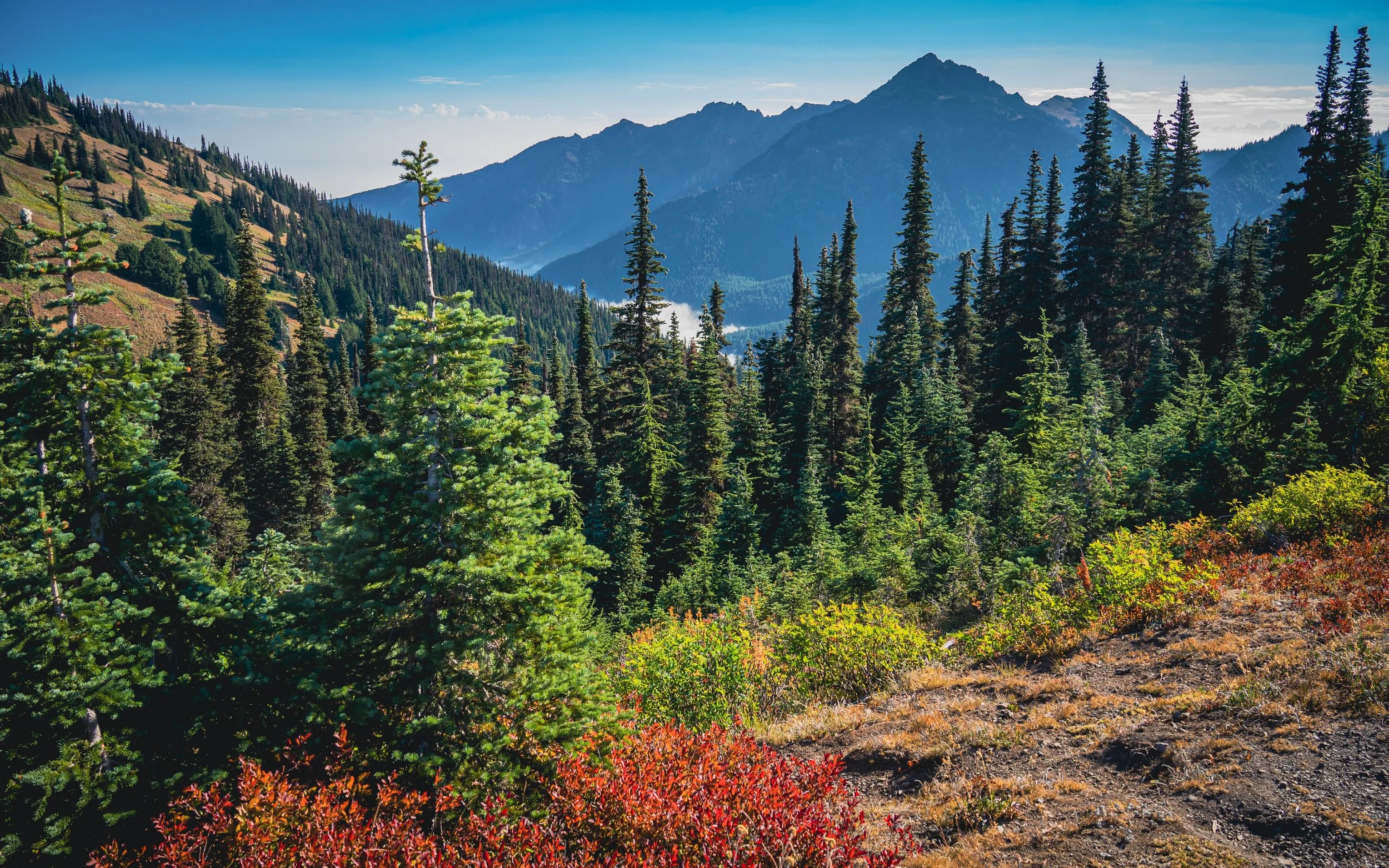
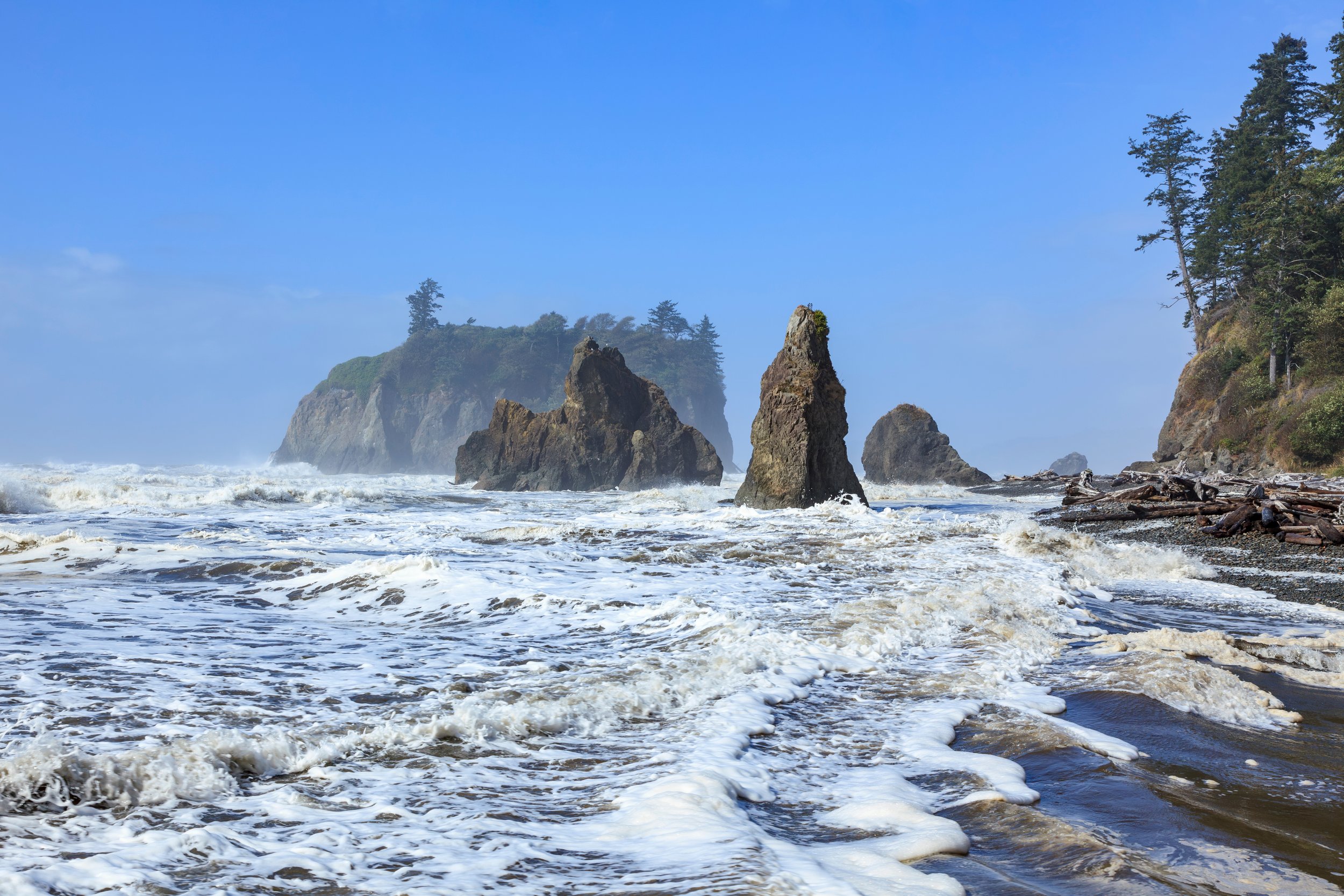
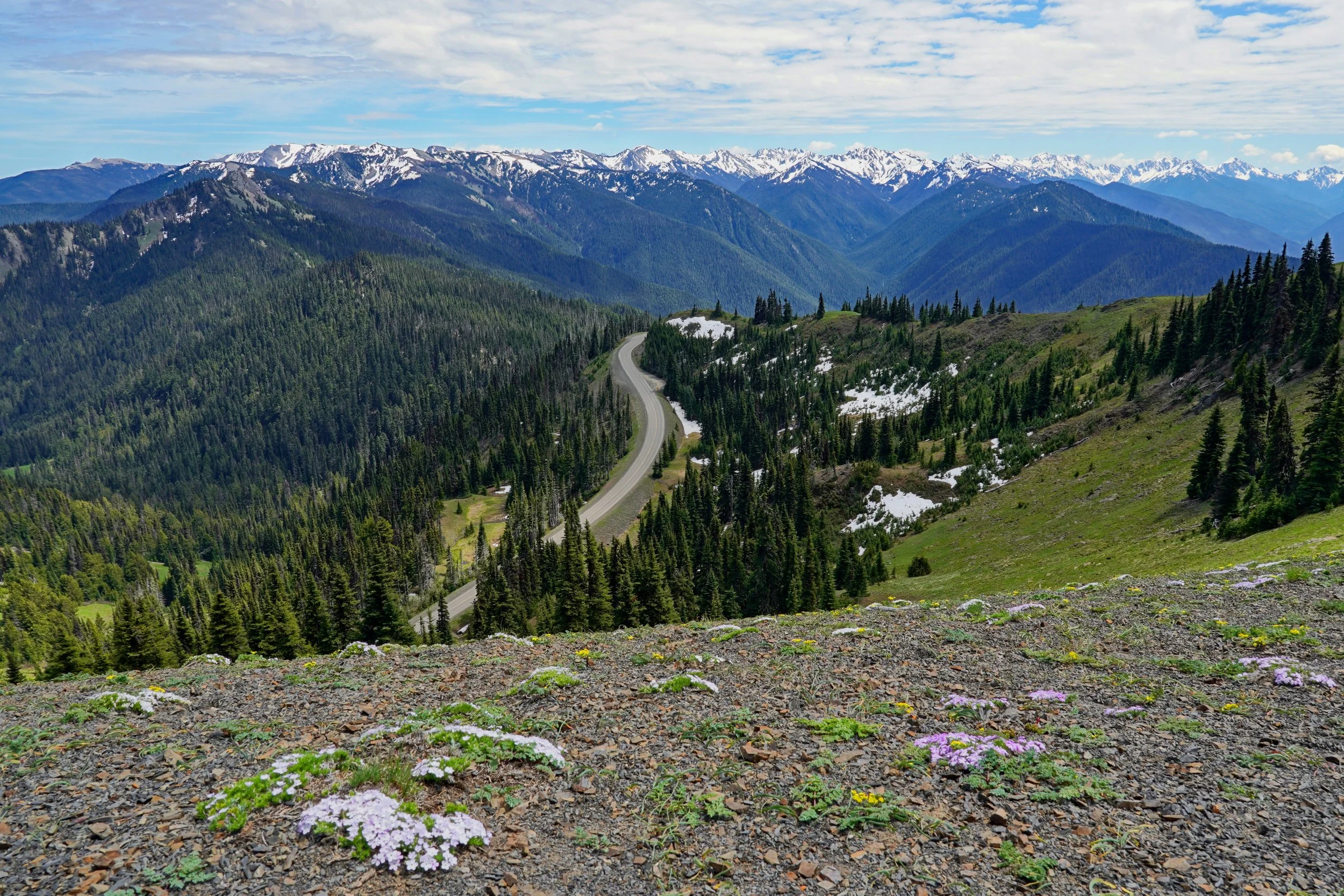
Coastline, old-growth forests and mountain glacier fields make up the diverse ecosystems protected by Olympic National Park. Franklin Roosevelt signed legislation creating the park in 1938 and in 1981 it was recognized as a UNESCO World Heritage Site. To further protect this fragile region, Congress declared 95% of the park as wilderness, making it the largest wilderness in the state.
There are almost no roads into the interior of the park, so most recreational opportunities occur around its perimeter. Fishing, boating, camping and hiking are a few of the options.