Ohio’s Miami Valley
Unless you are from the area, this part of Ohio was probably not on your radar. Nevertheless, you can see from the map that it is filled with historic and cultural sites. Artifacts from ancient mound builders and the history of flight are just two of the things that await. Here are a few of the highlights:
Fort Ancient
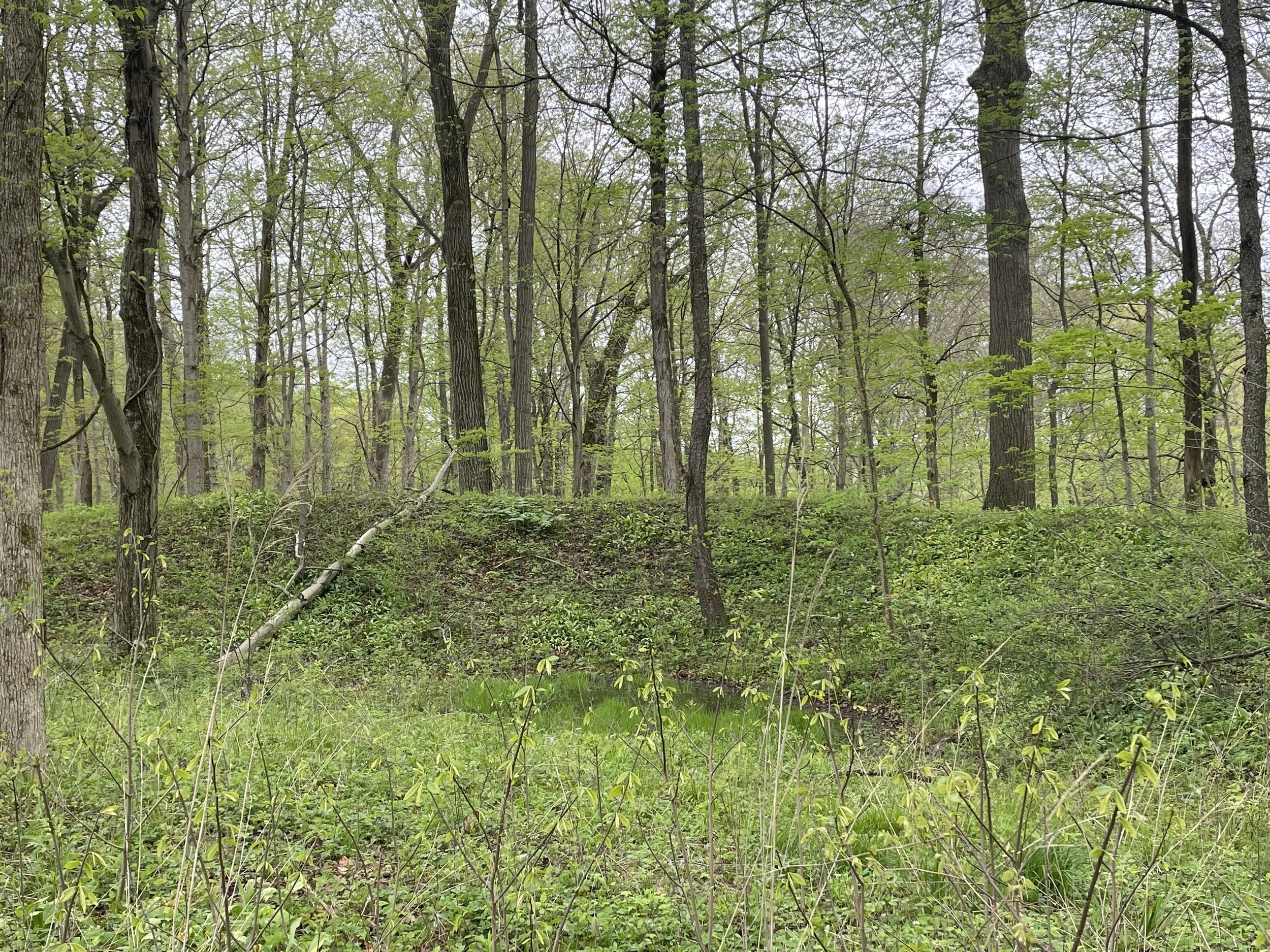
The Fort Ancient memorial contains a network of mounds constructed by the Hopewell culture that inhabited the area between 200 BCE and 400 CE. It is the largest hilltop enclosure in the United States.
The original theory that the earthworks were intended for defense has been largely discounted. More recent research indicates the site was intended for social and ceremonial purposes.
Hopewell Culture National Historical Park
The Hopewell people are best known for the earthen mounds they constructed between 200 BCE and 500 CE. Many of these were built in geometric patterns or other shapes. A concentration of these mounds can be found in Ohio's Scioto River Valley and particularly in and around "Mound City" near Chillicothe.
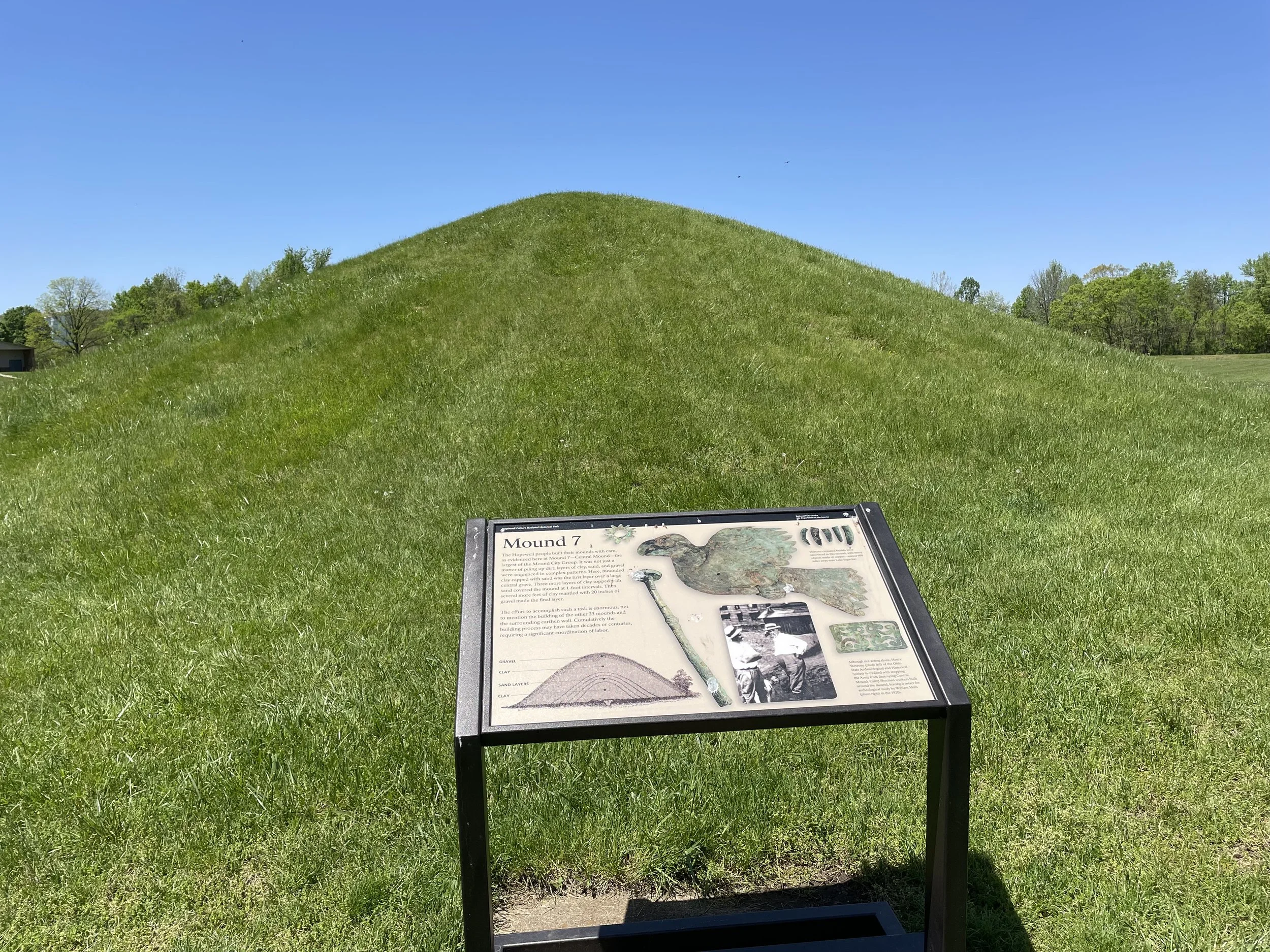
Construction of the mounds required thousands of hours of labor. Soil was carried manually to the sites in woven baskets. While many appear to be ornamental, a very large number were built over the remains of charnel houses following human cremations.
The park is managed by the National Park Service and has also been designate a UNESCO World Heritage Site.
Dayton Aviation Heritage National Historical Park
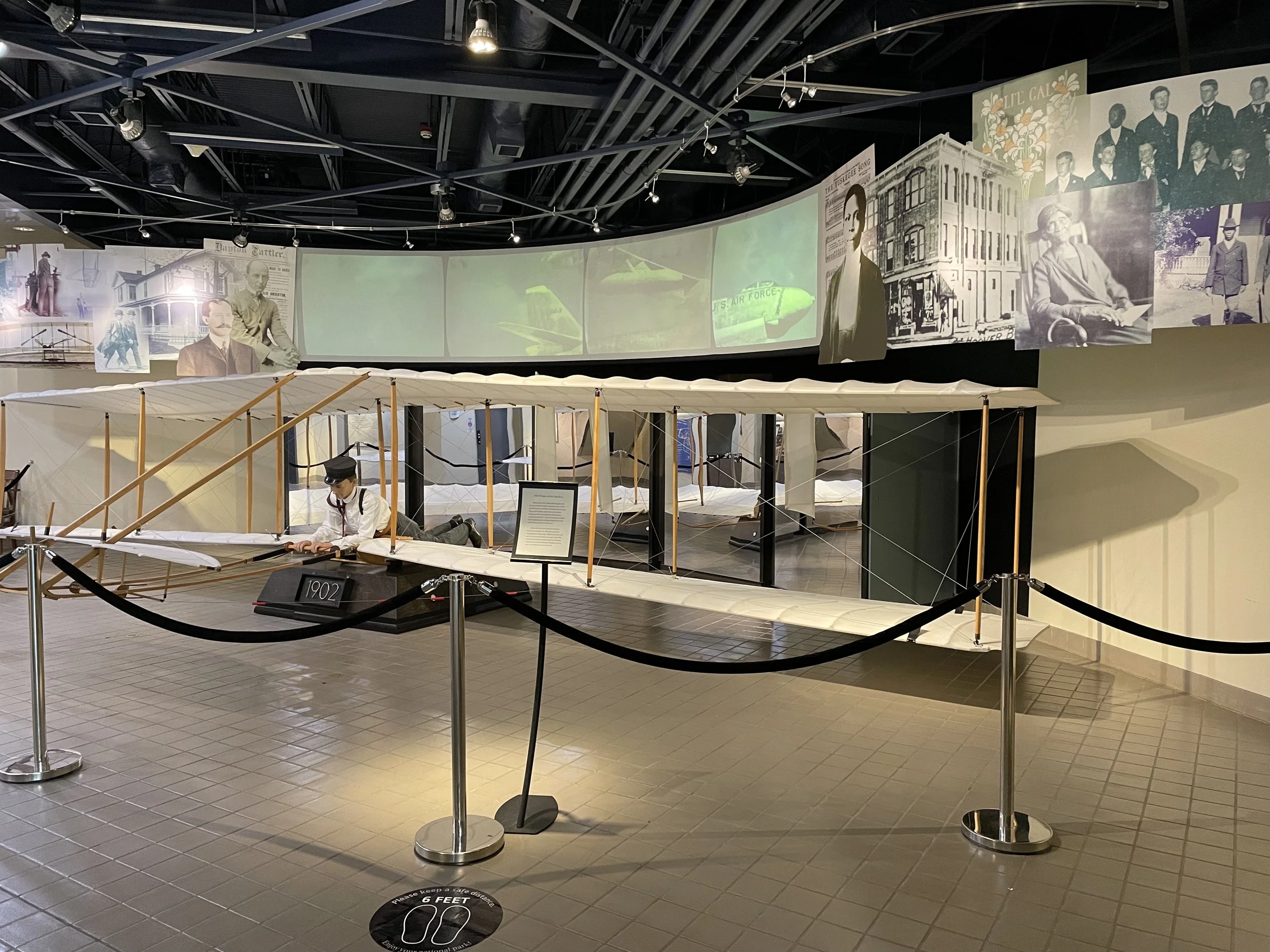
Despite the reference to aviation in the park name, it actually commemorates the Wright Brothers and African American poet Paul Laurence Dunbar. All three men were Dayton natives, neighbors and life-long friends.
The historical park contains the fourth and final Wright Brothers bicycle shop along with the Dunbar home. The park helps preserve and interpret the stories of all three men.
National Museum of the United States Air Force
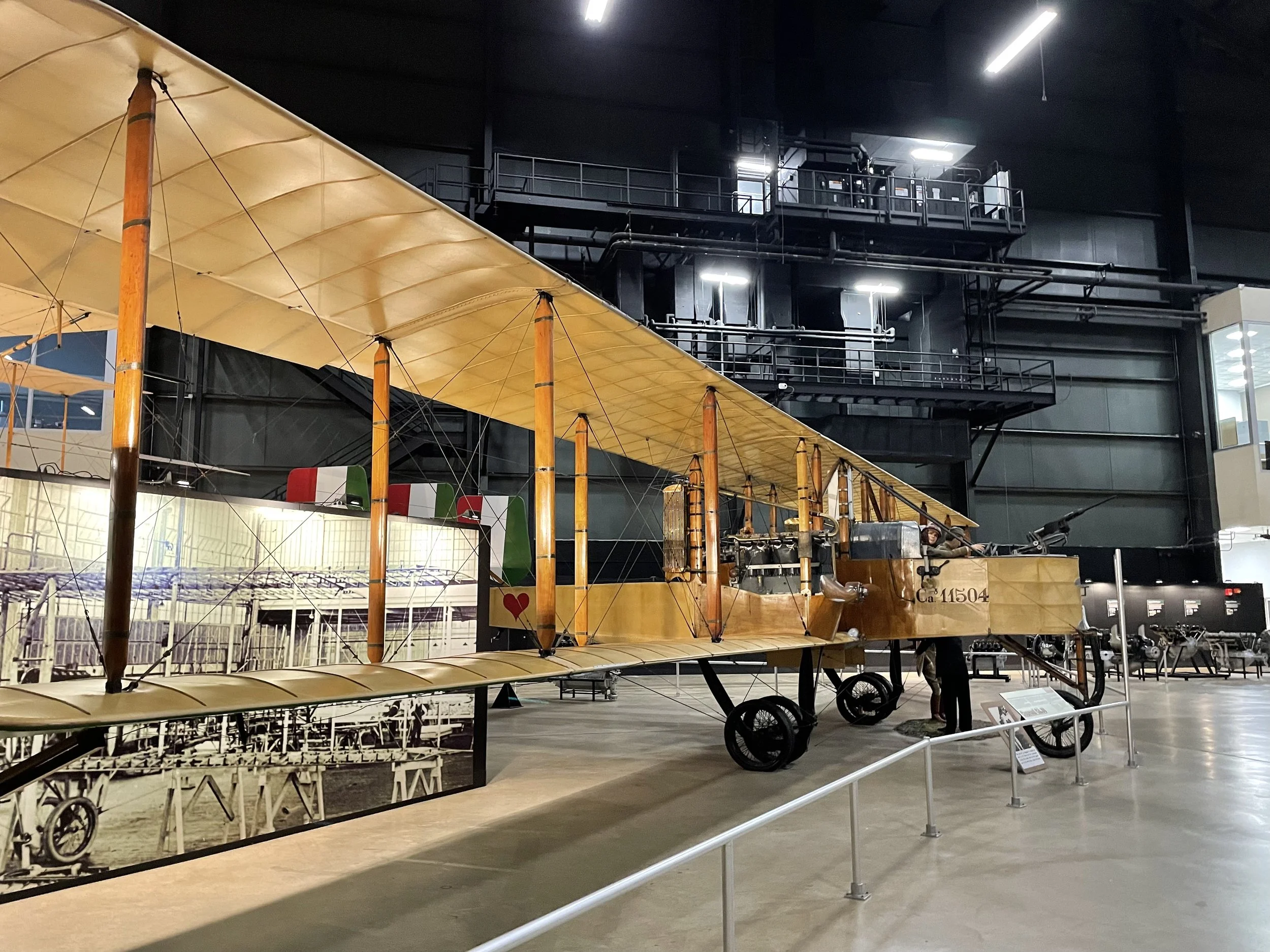
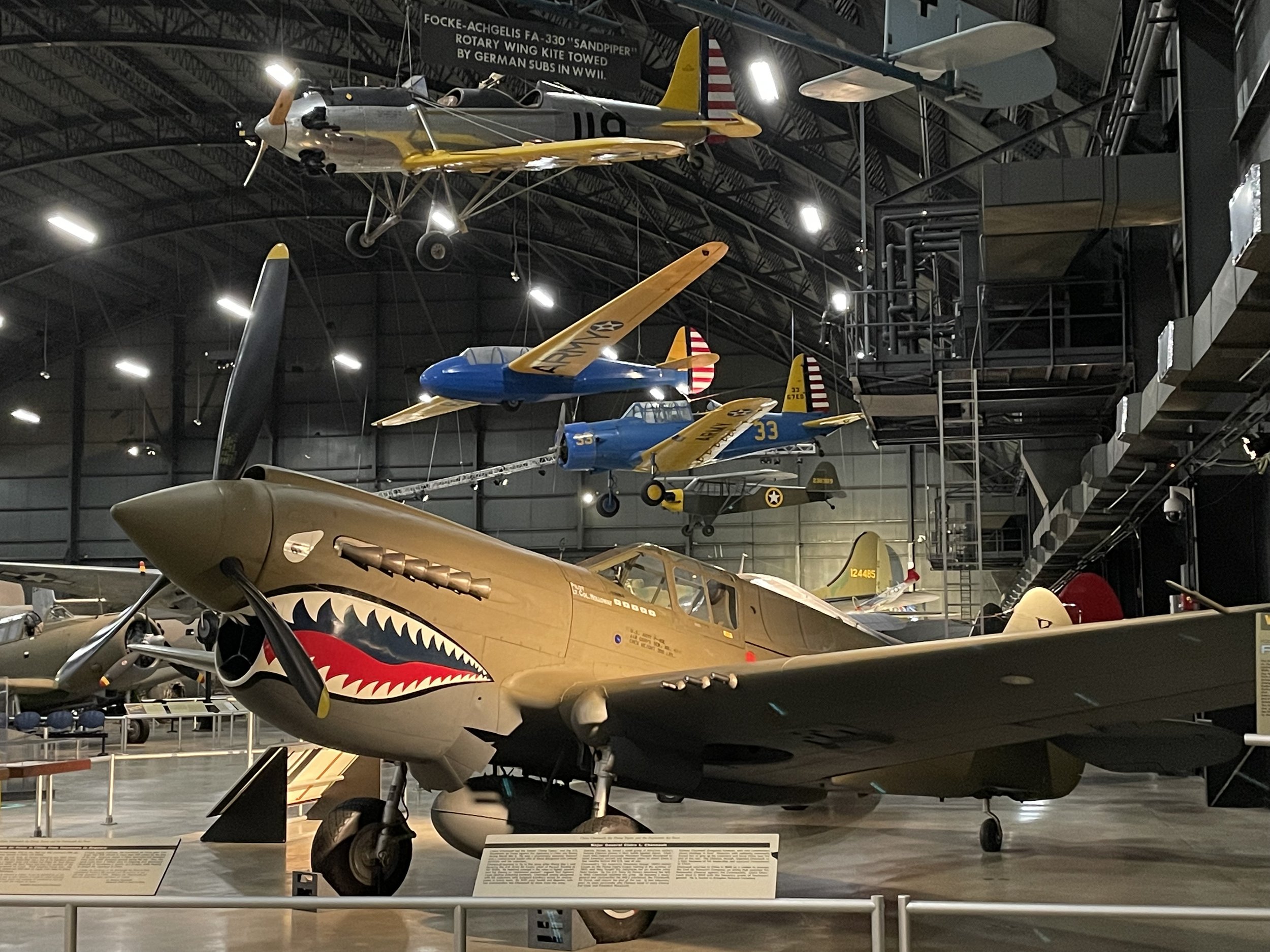
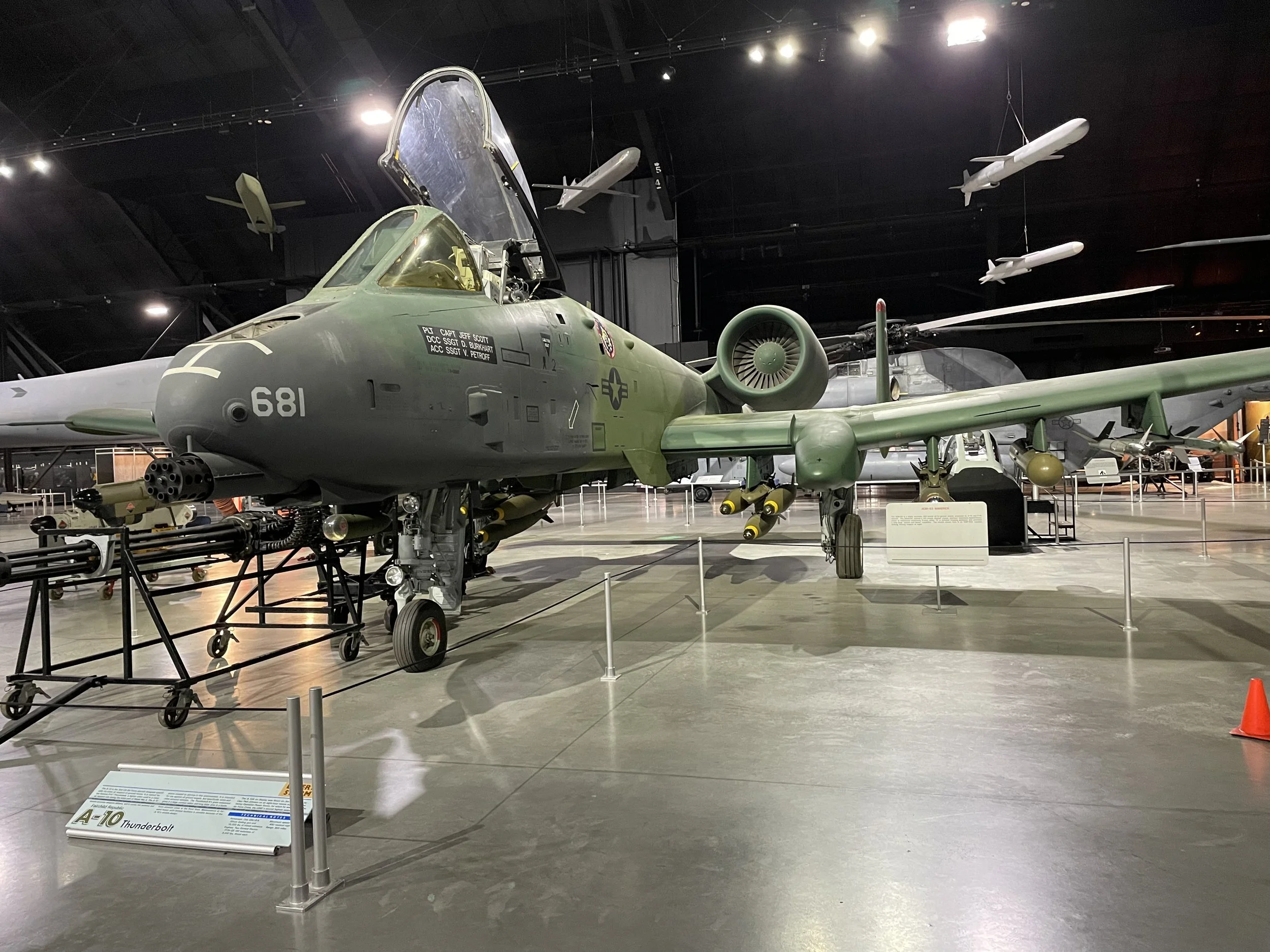
The Air Force Museum at Wright Patterson AFB is the primary museum for that branch of the service. It tells the story of American aviation and its military applications from the adoption of balloons through the current, most modern, aircraft.

Charles Young Buffalo Soldiers National Monument
Born into slavery in Kentucky, Charles Young (1864-1922) escaped to the north where he became a Buffalo Soldier and the 3rd African American to graduate from West Point. Young rose to the rank of Colonel and, until his death, was the highest ranking black officer in the United States Army.
Young also went on to become the first black national park superintendent and later taught military science and mathematics at Wilberforce University in Ohio. Young also served as an ambassador to Liberia and it was there that he died in 1922.
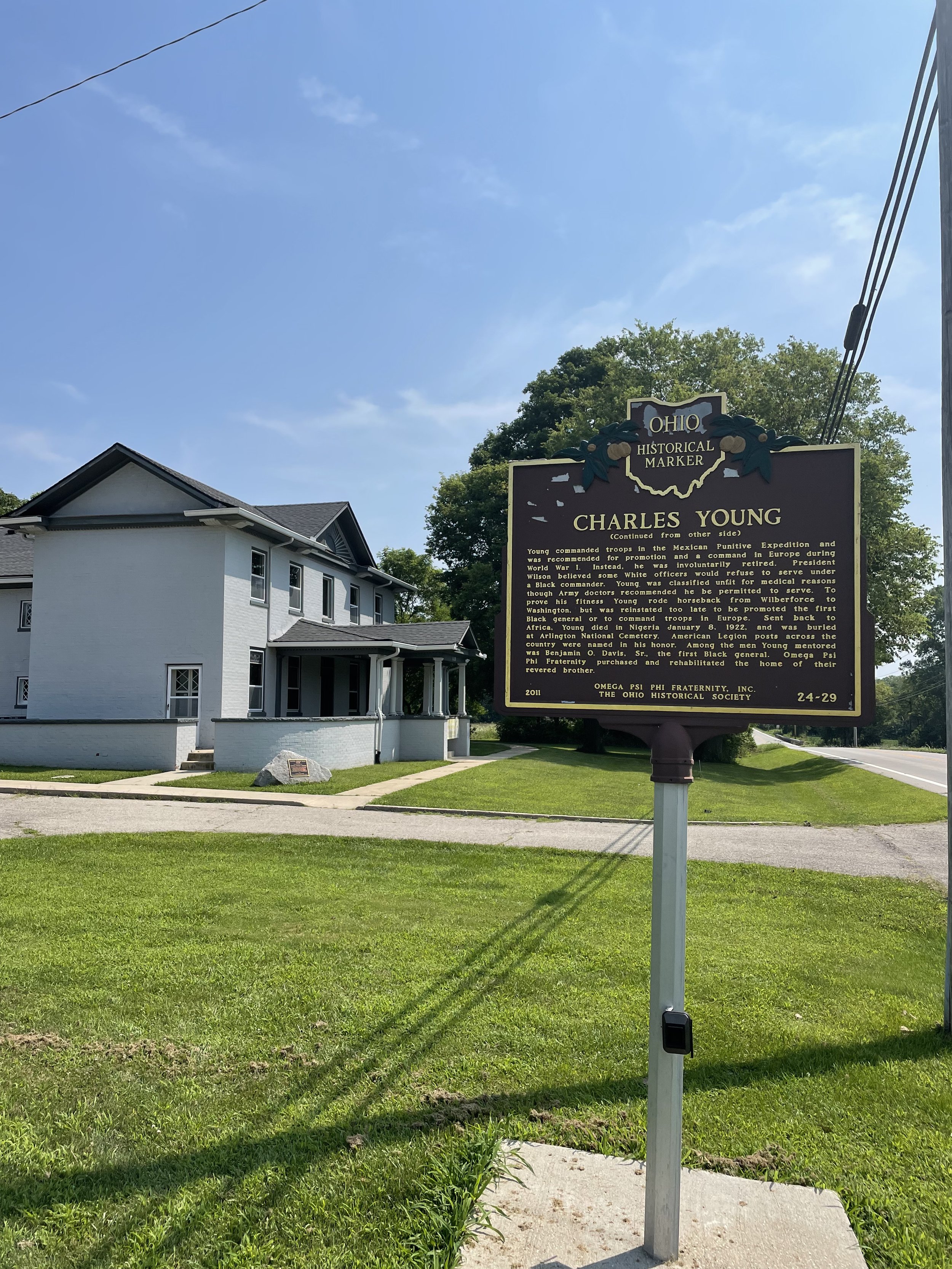
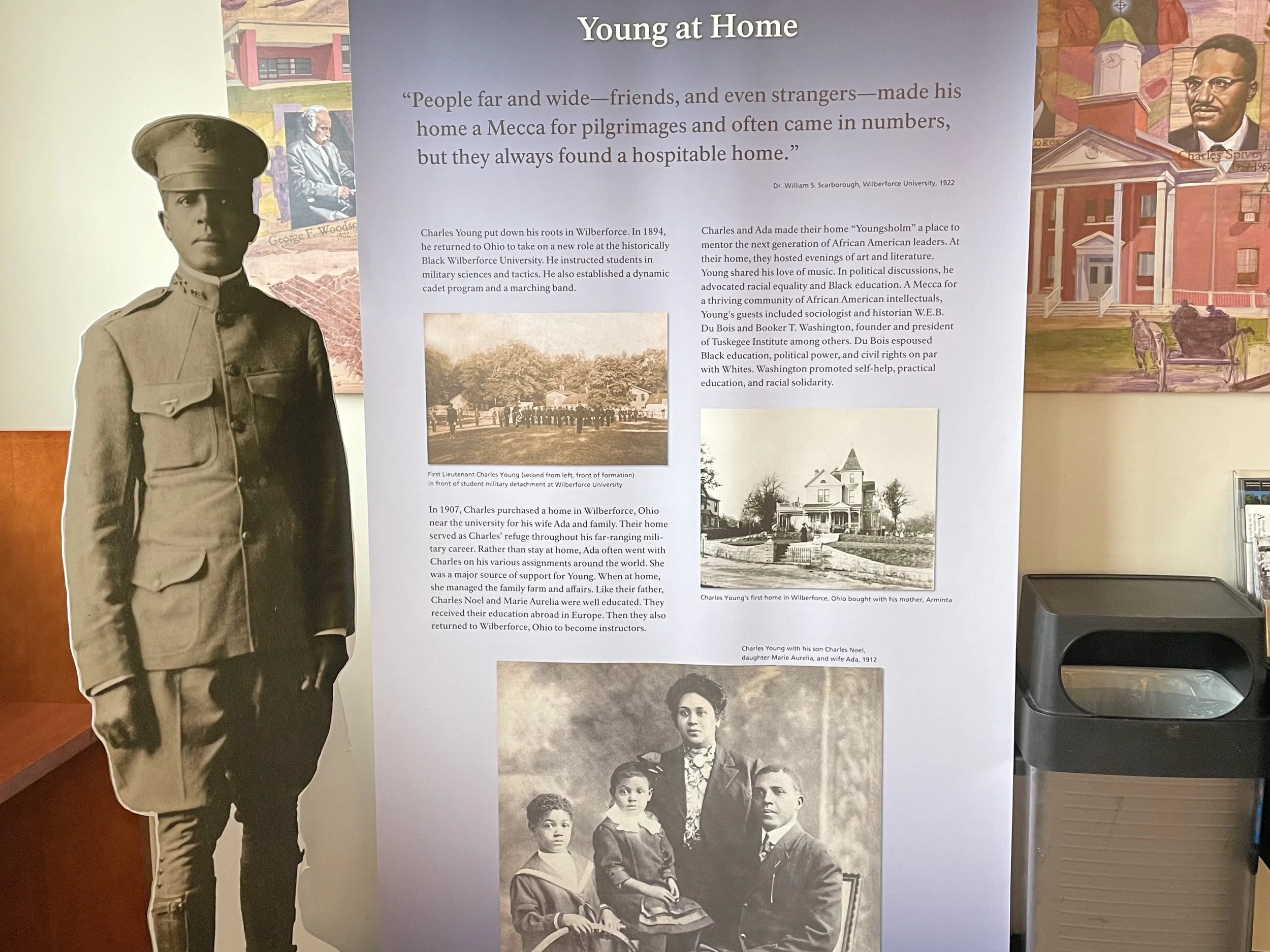
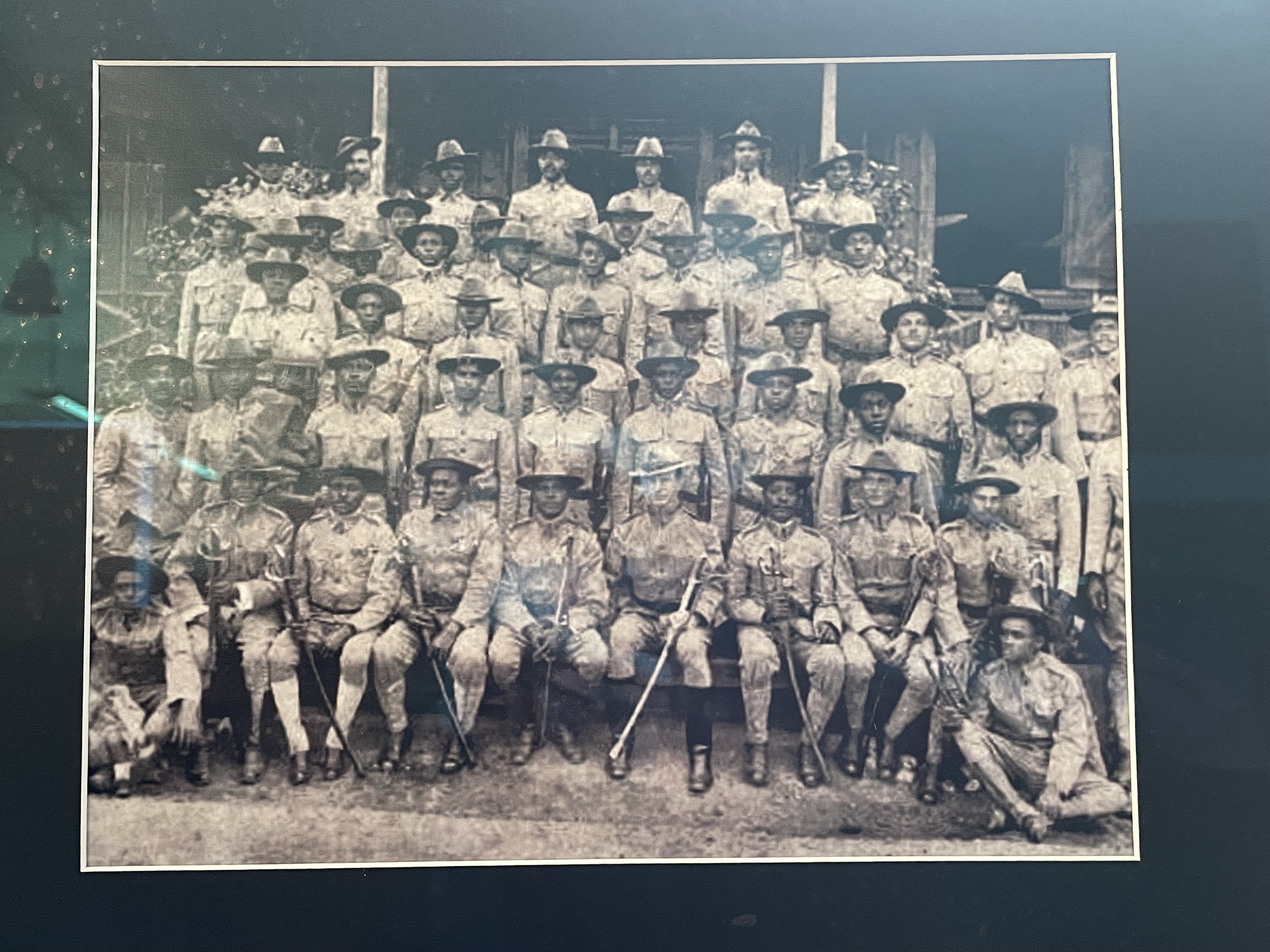
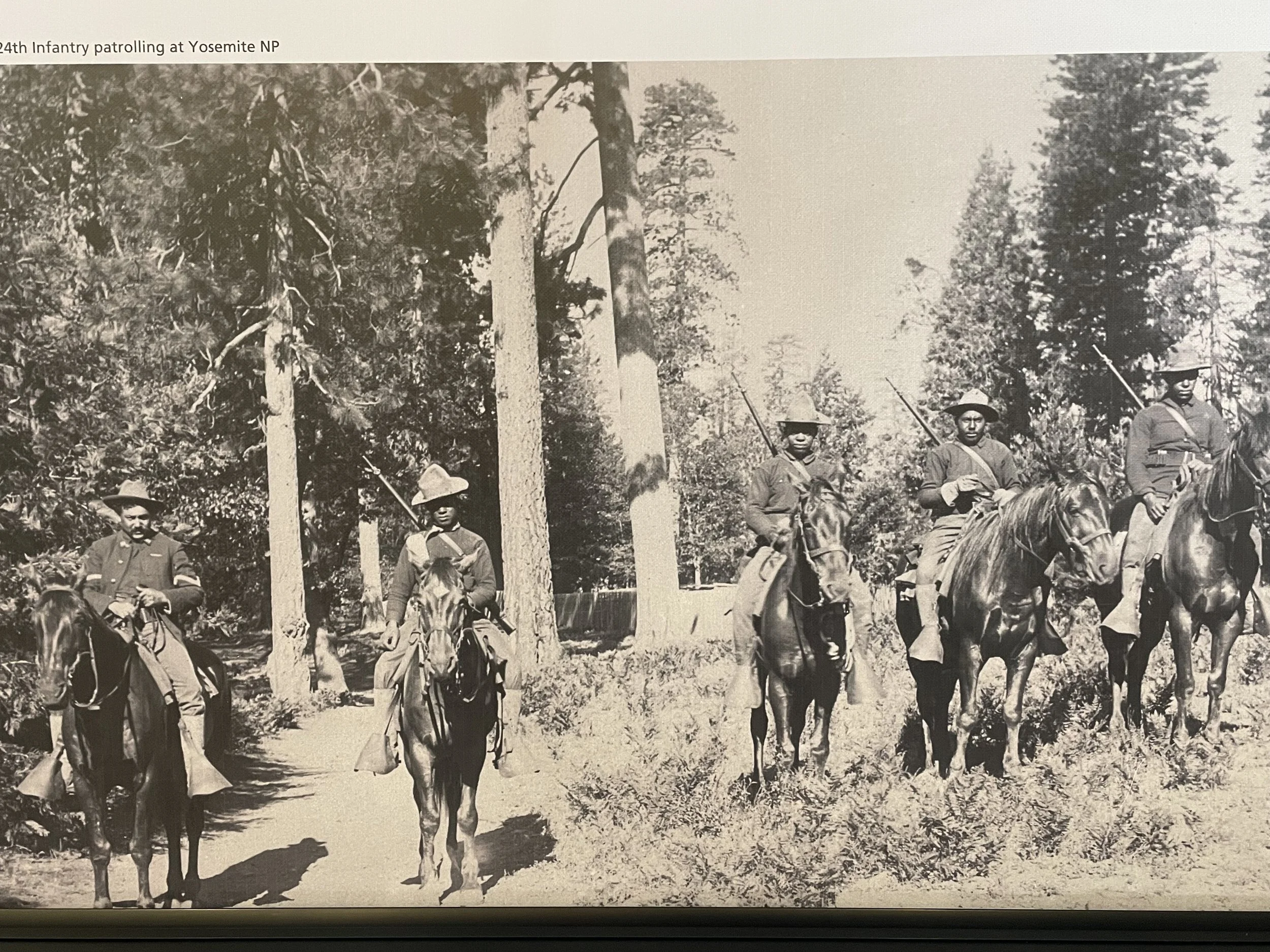
While at Wilberforce, Young bought a home, which stands today. In 2013, President Obama designated Young's home as a National Monument. The home contains artifacts from the four buffalo soldier regiments and details about the extraordinary life of Charles Young.
National Afro-American Museum & Cultural Center
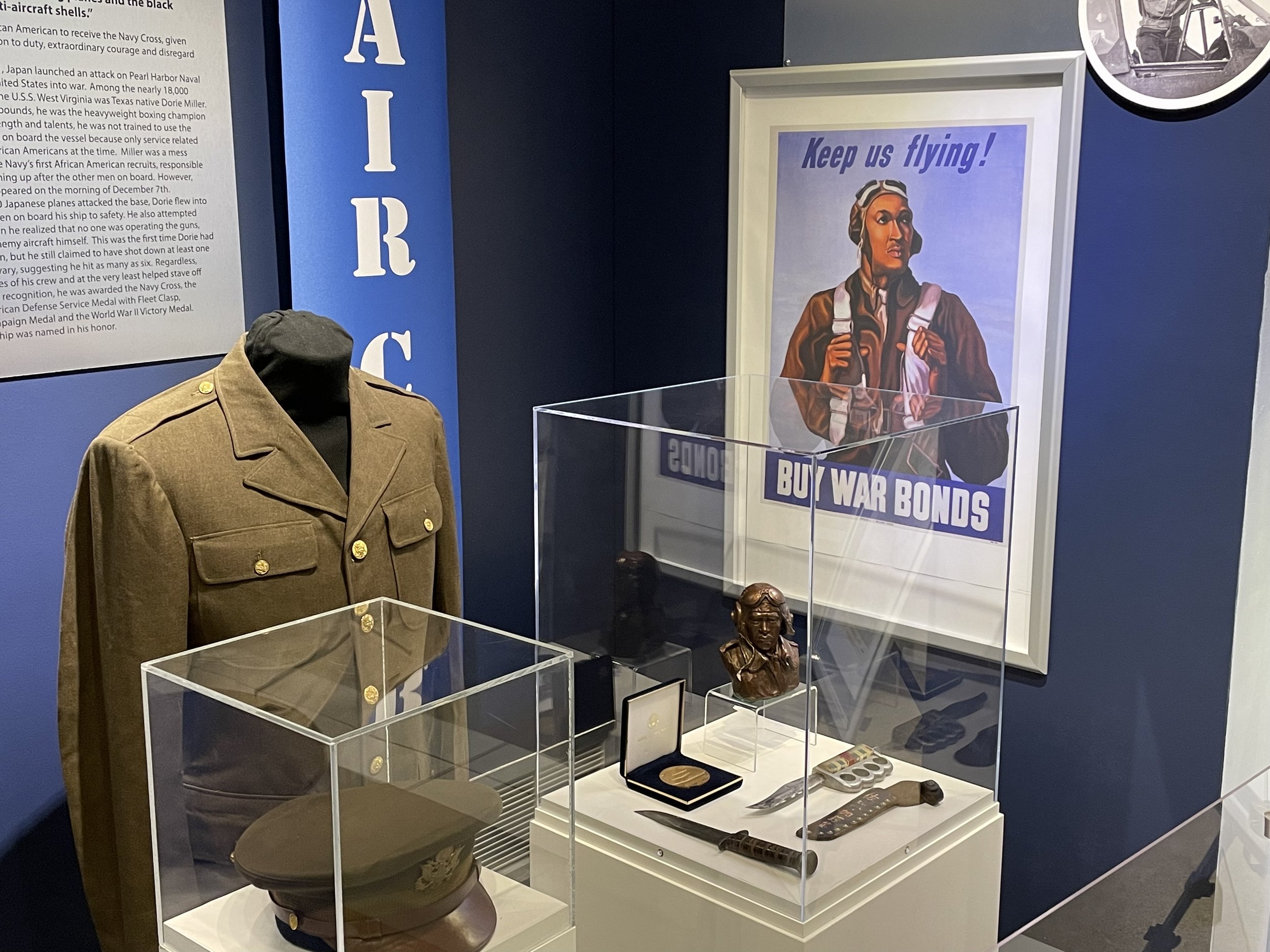
Established in 1987 on the historic campus of Wilberforce University, the first African-American institution of higher learning in the United States. The museum helps tell the story of the African American experience from African origins through the current day.
Clifton Gorge State Nature Preserve
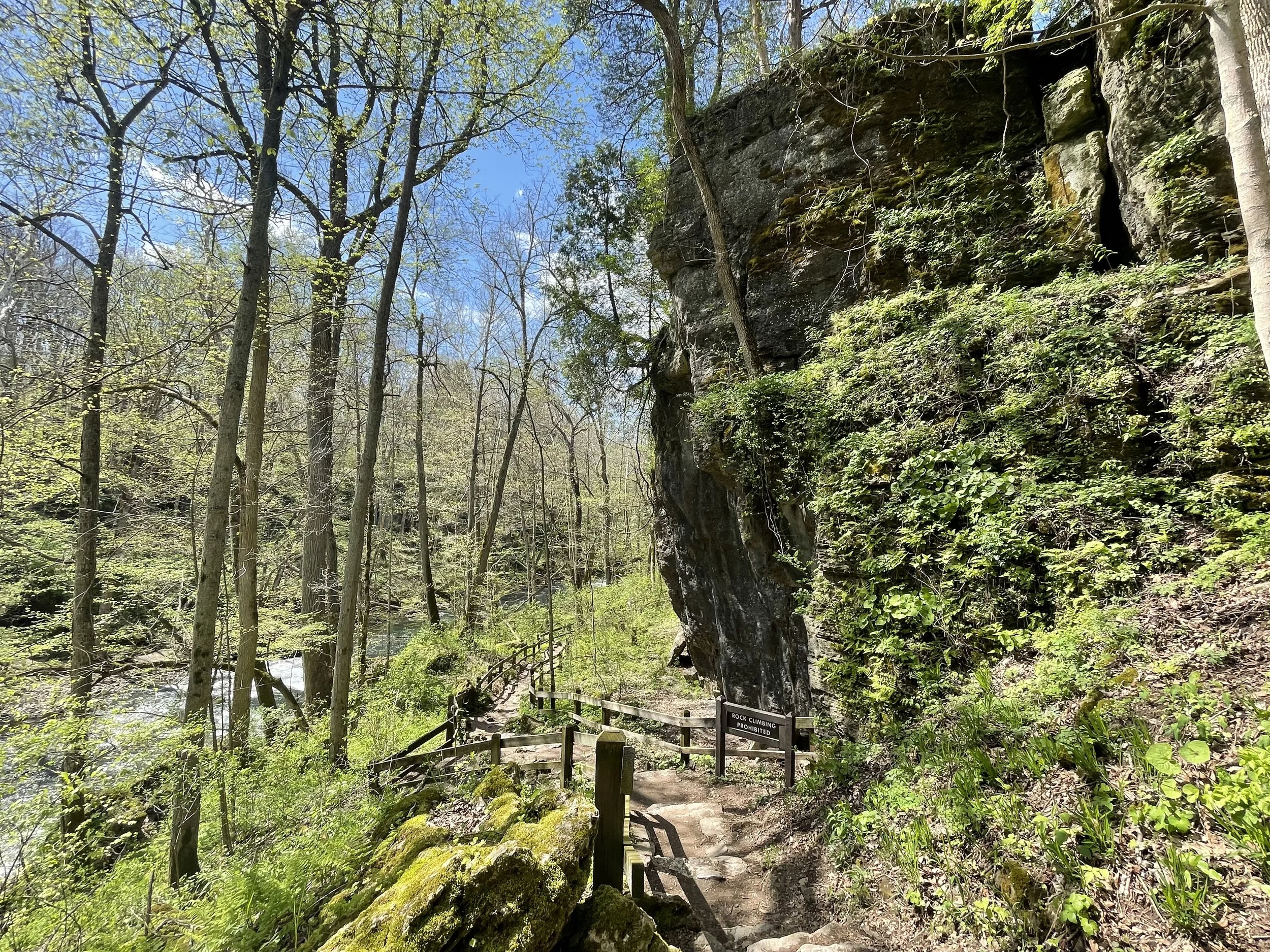
This short section of the Little Miami River has carved out a spectacular dolomite and limestone gorge, which can be accessed from the town of Clifton or from John Bryan State Park. It was designated a National Natural Landmark in 1968 and is managed by the Ohio Department of Natural Resources.
Adena Mansion & Gardens Historic Site
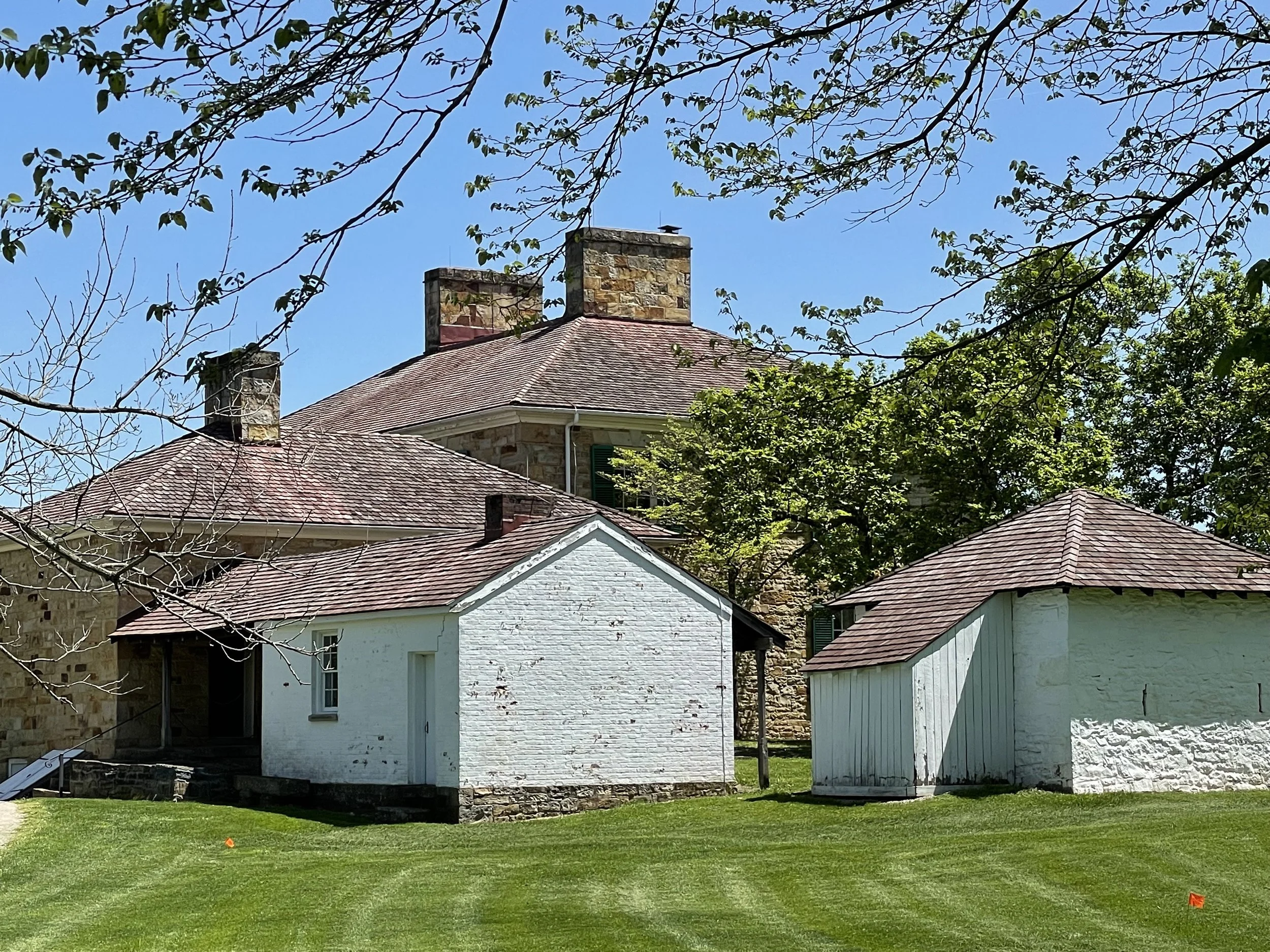
Originally built for Thomas Worthington, who served as Ohio's sixth governor, the property was added to the National Register of Historic Places in 1970. The mansion takes its name from a mound on the property that was attributed to the early Adena culture. The site is managed by the Adena Mansion and Gardens Society.