America’s Great River
From prehistory to the modern era, the Mississippi River has been important as a means of transportation, communication, cultural identity and trade. The section of the river extending from Natchez to Vicksburg contains historical remnants that remind us of what the river has meant to peoples across millennia.
Mound Builders
The Mississippian people erected mounds for burials and ceremonial purposes near many of the large eastern rivers. The Mississippi River has one of the largest concentrations and there are dozens of examples between Natchez and Vicksburg.
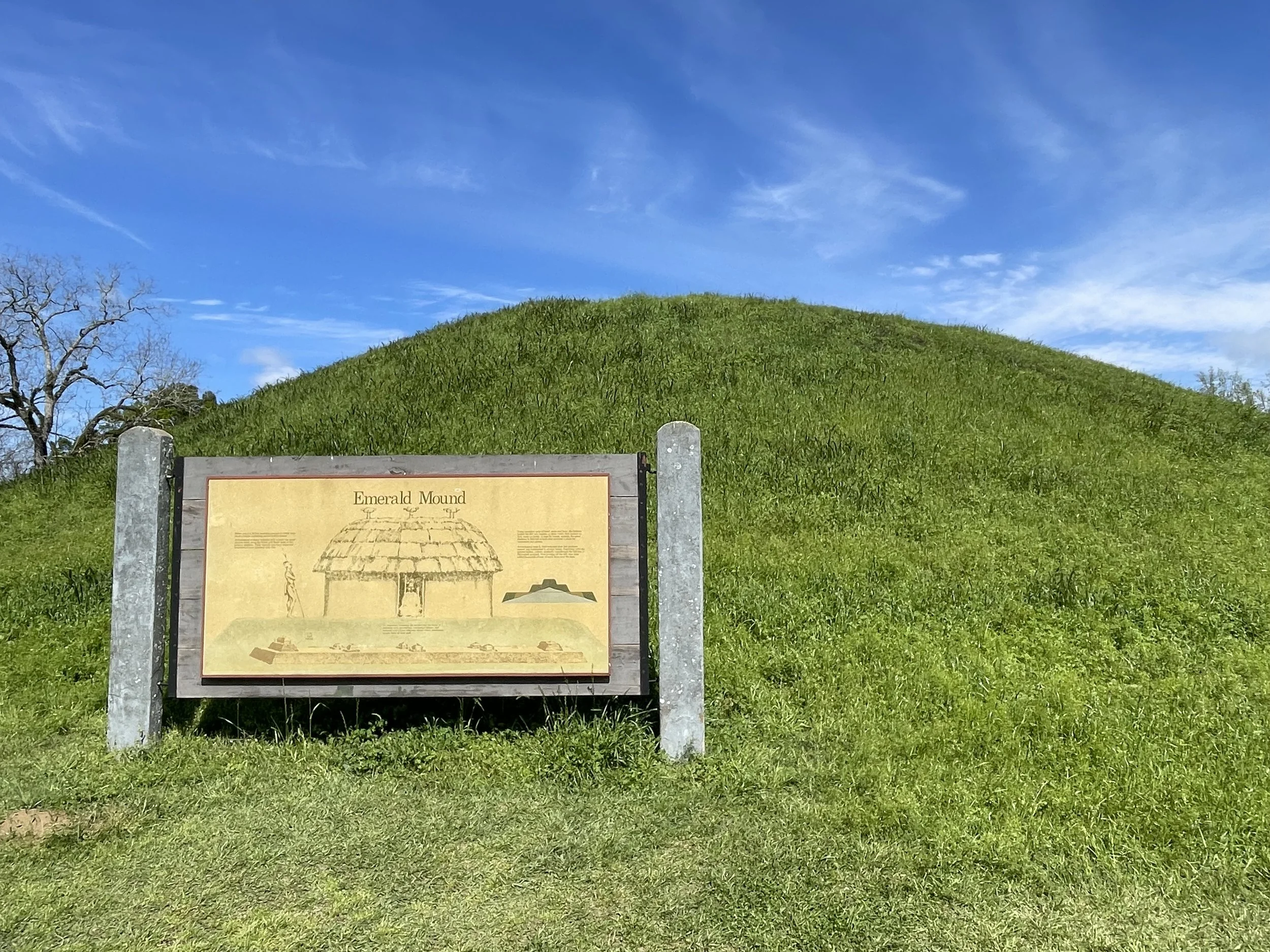
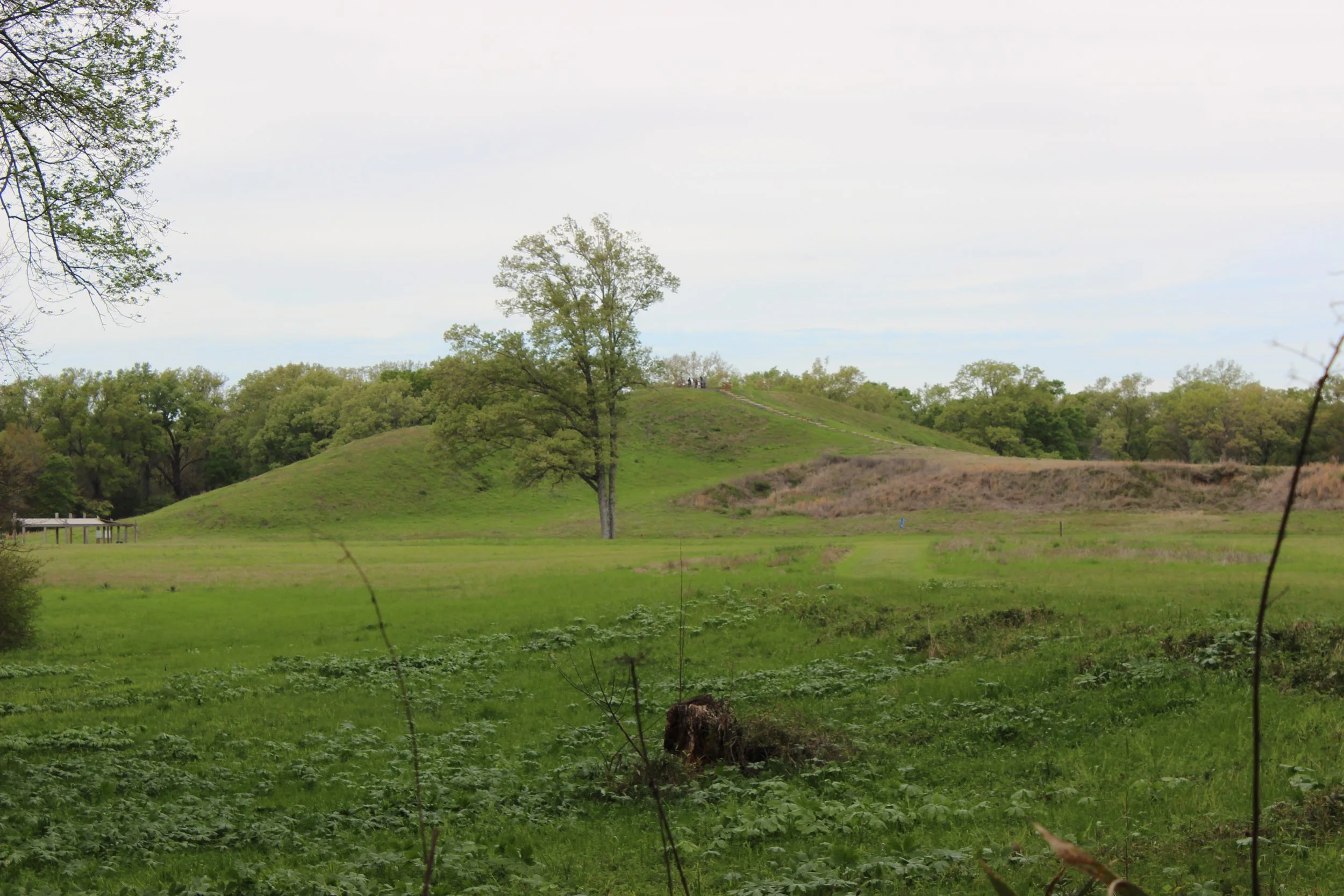
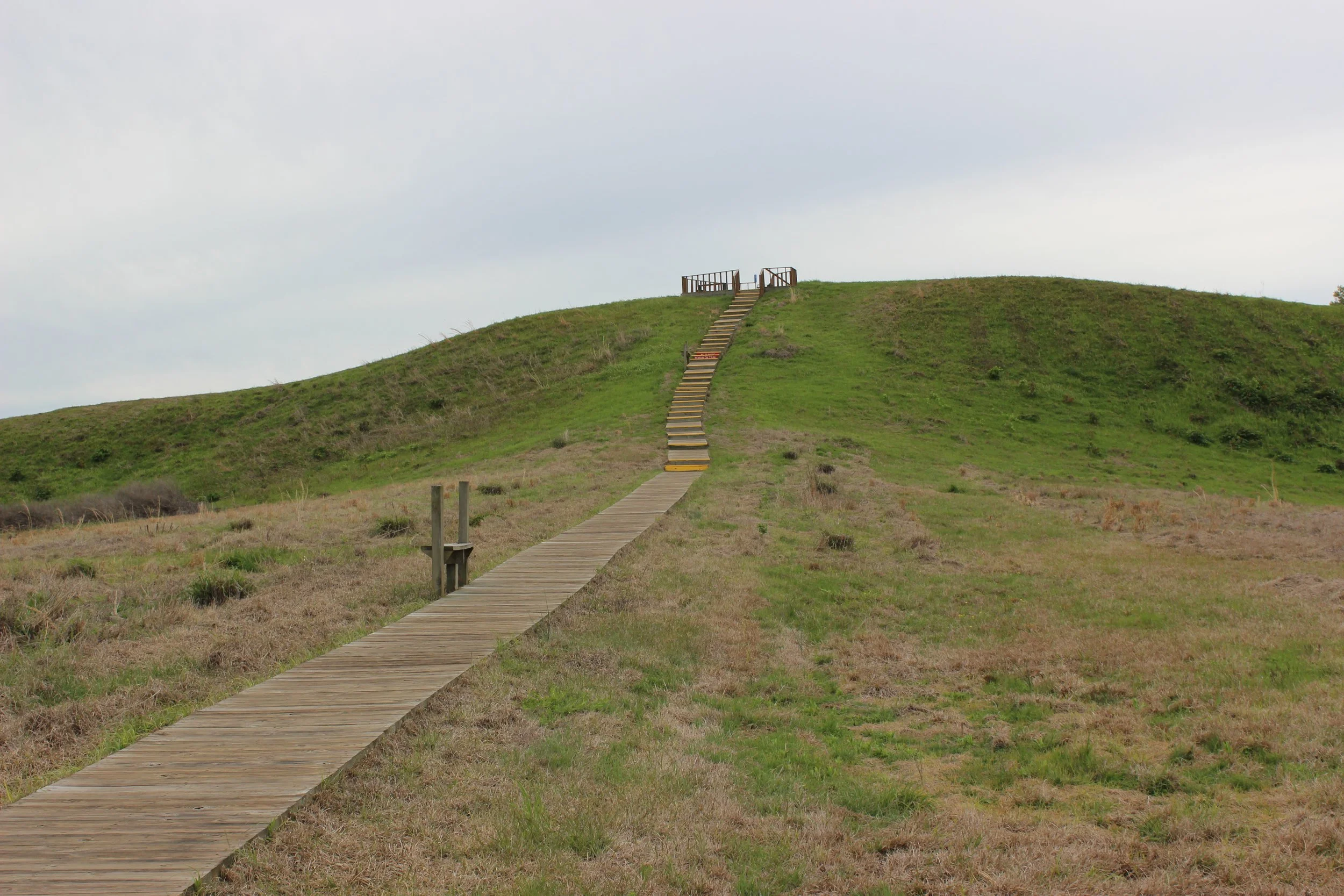
Emerald Mound, near Natchez, was in use until as late as 1600 CE. It is the second-largest earthen mound in the United States covering an area of nearly eight acres. The mound was used as a ceremonial center for the local population. Today it is on the National Register of Historic Places and is managed by the National Park Service.
The Fitzhugh Mounds, near Vicksburg, are another example. Only two mounds exist in what was once a larger complex.
The Poverty Point, east of Vicksburg, is one of the most important and well studied sites on the Southern Mississippi. This series of earthen mounds was used for ceremonial and residential purposes. These remnants of an ancient indigenous society were built between 1700 and 1100 BCE. The site is said to contain the most complete example of earthwork structures from the archaic period. Poverty Point was designated a UNESCO World Heritage Site in 2014.

Transportation Hub
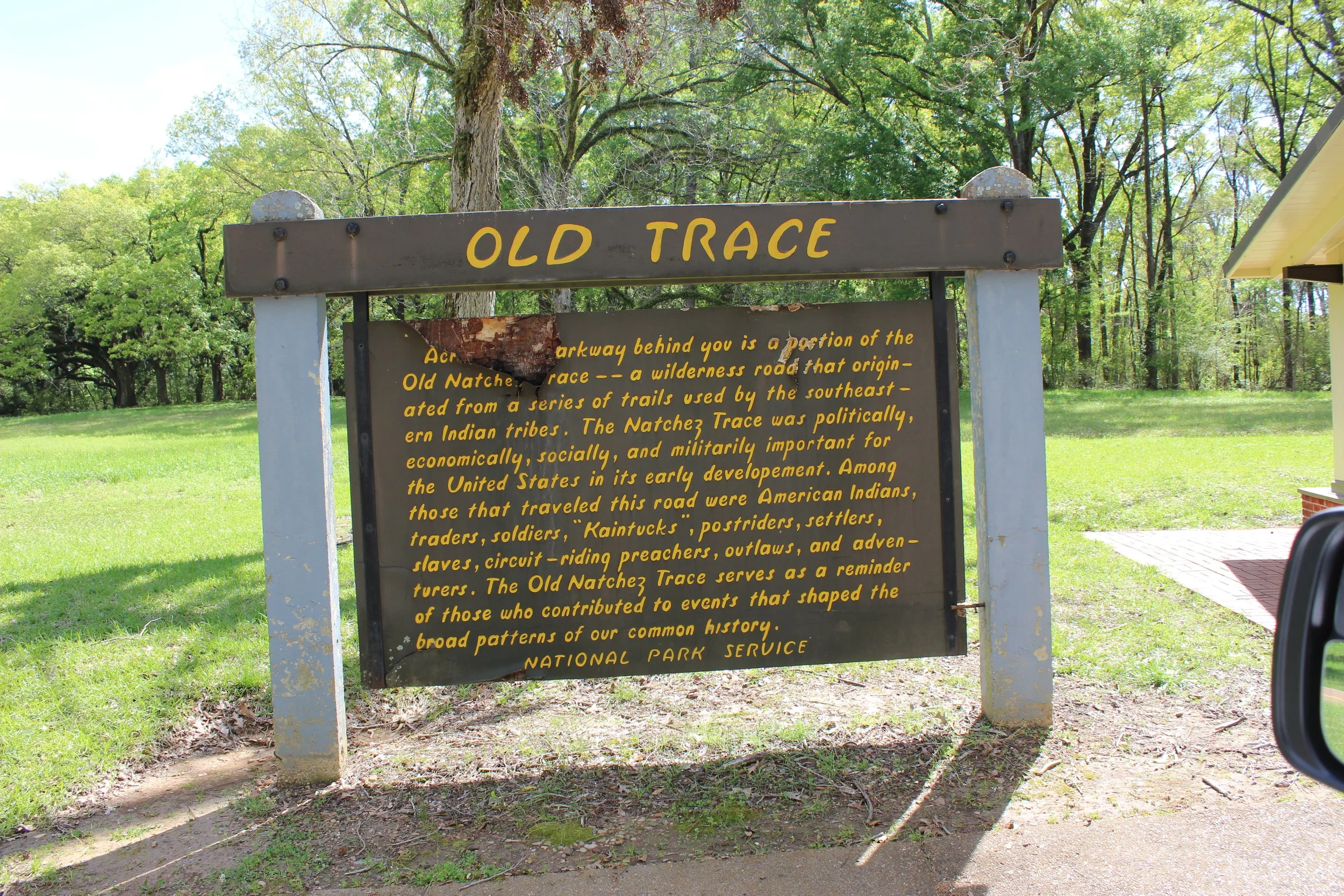
The Natchez Trace National Scenic Trail retraces the old 444-mile route through Tennessee, Alabama and Mississippi that originated near Natchez. It was used by Native Americans even before it became one of the primary pathways for colonizing what was then considered the American southwest.
Today about 60 miles of the trail have been developed for hiking. The remainder must be traveled by motor vehicle. The route is managed by the National Park Service. It connects travelers with many significant points of interest.
Civil War
During the Civil War, control of the Mississippi was of major strategic importance. From May 18 through July 4, 1863, the Union Army of Tennessee commanded by Maj. General Ulysses S. Grant besieged the Confederate Army of Mississippi under Lt. Gen. John C. Pemberton at Vicksburg, Mississippi.
In an effort to bypass the defensive positions around Vicksburg, attempts were made to dig a canal and divert the flow of the Mississippi. The plan ran into numerous difficulties and was eventually abandon. Remnants of “Grant’s Canal” are still visible east of the city.
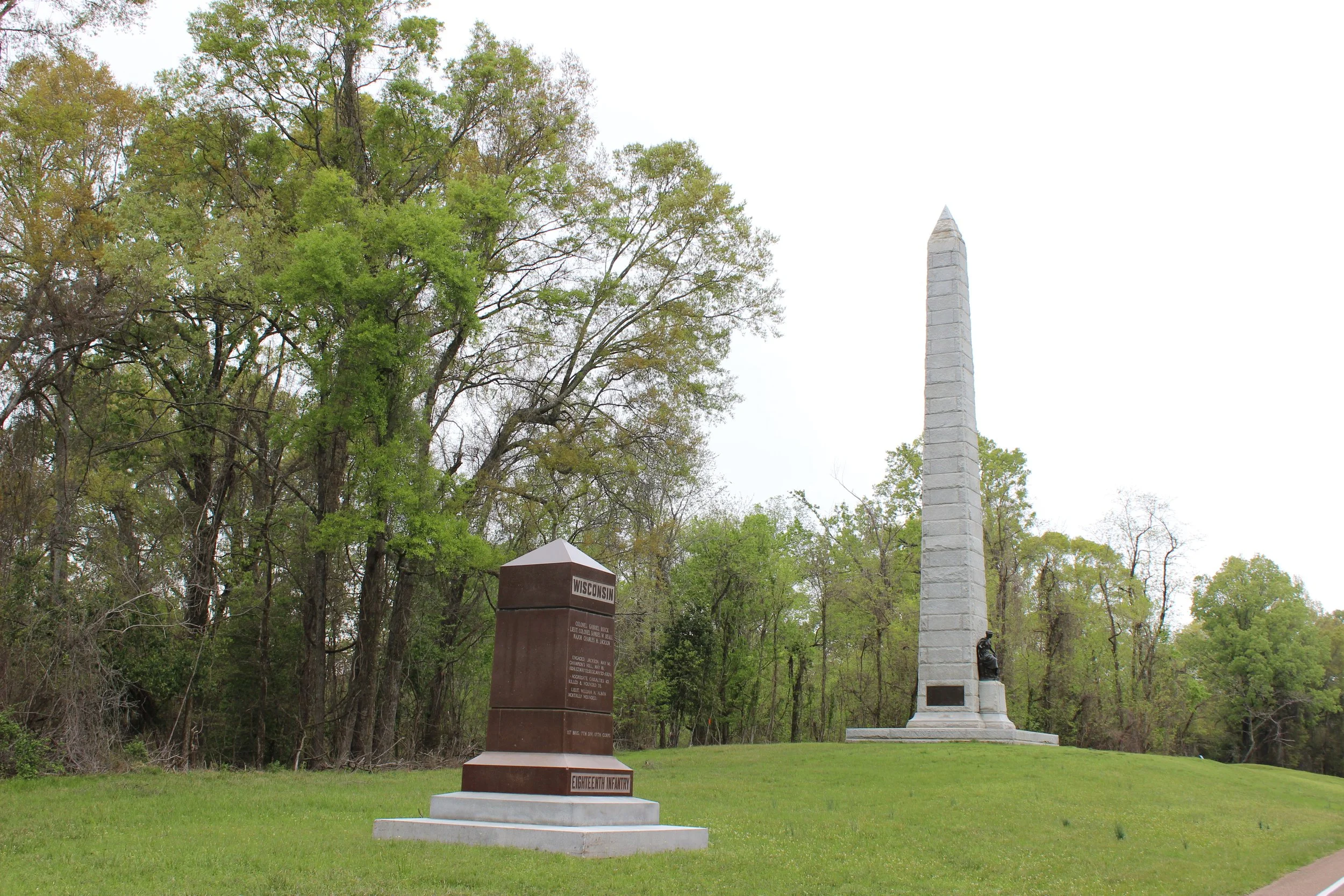
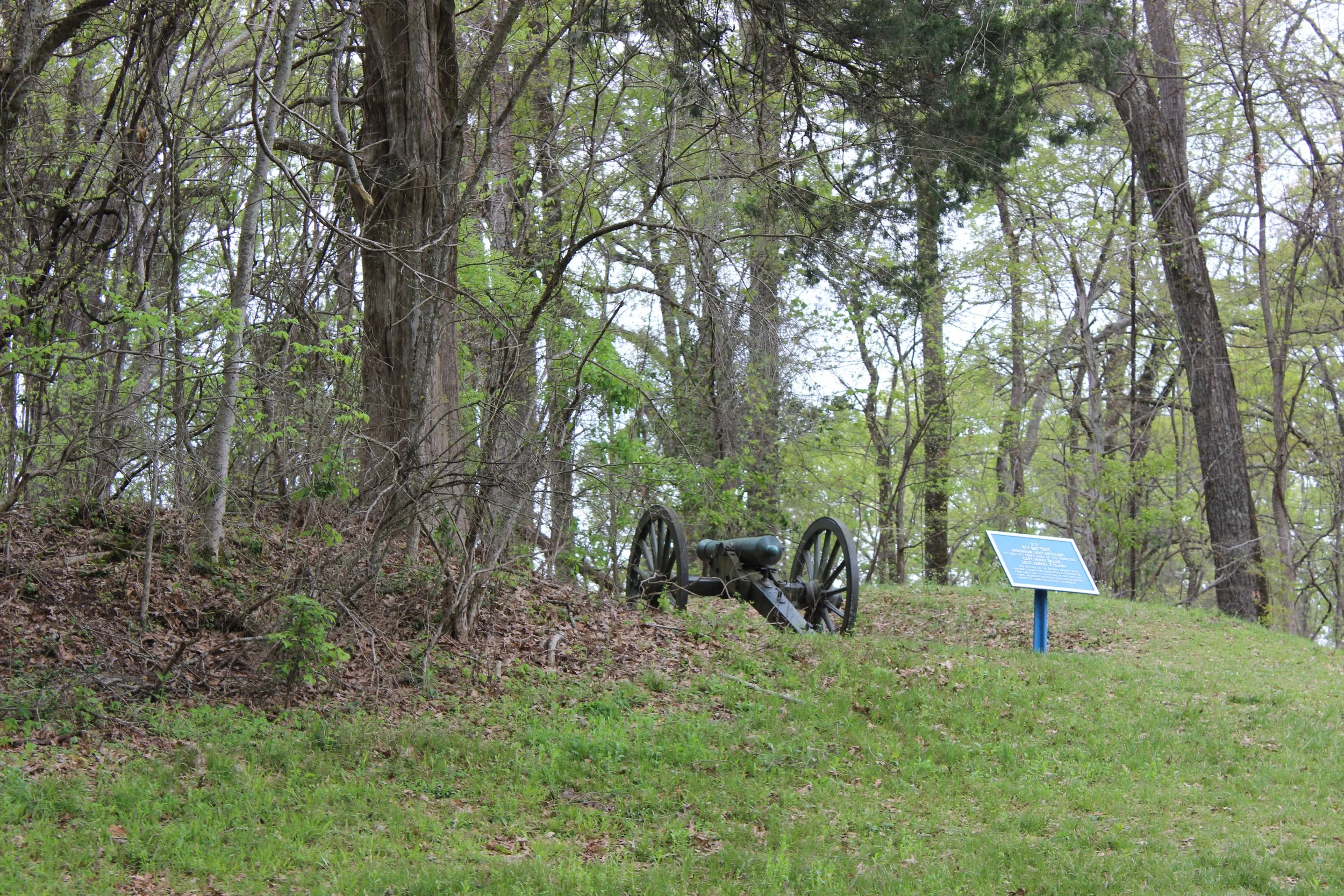
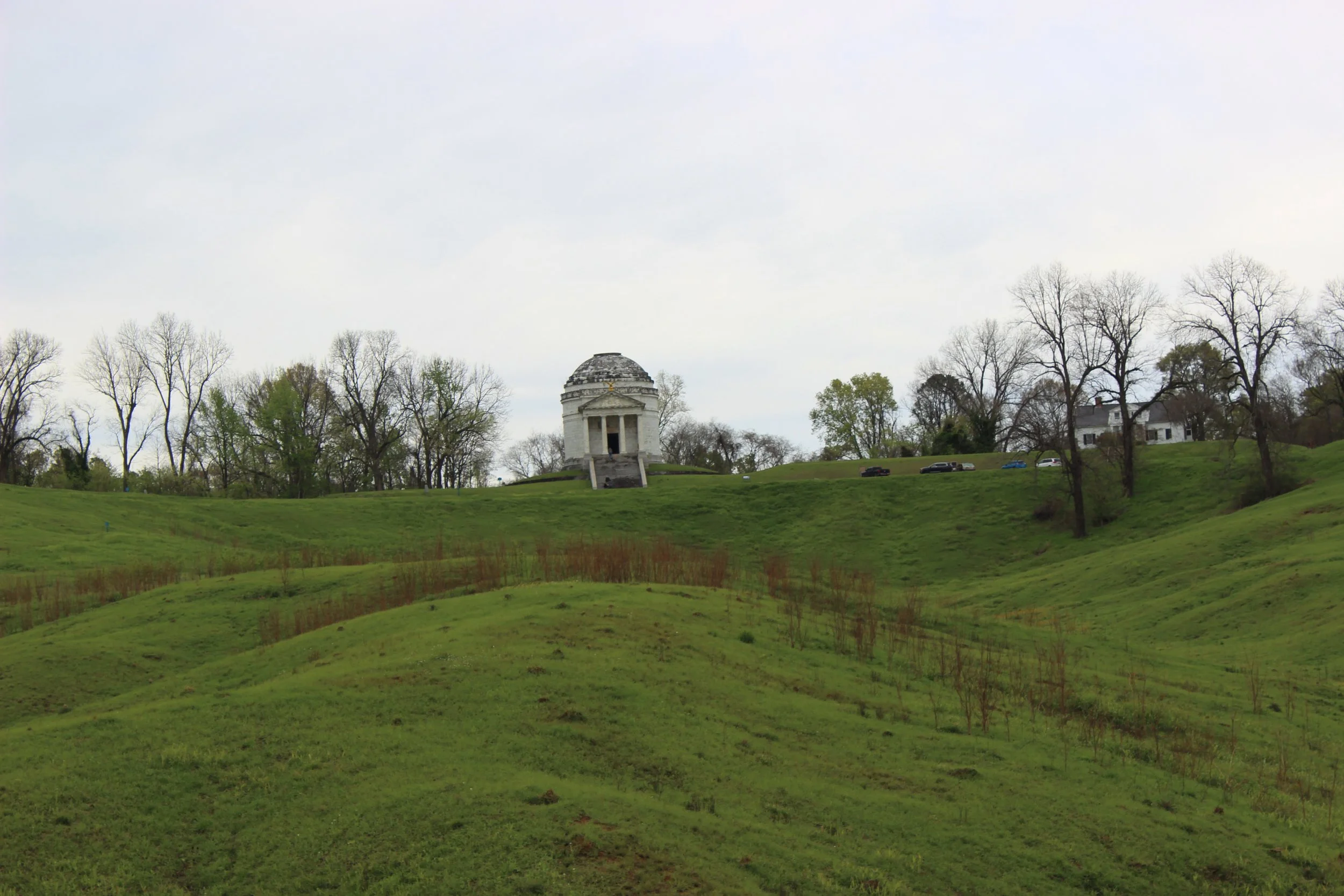
The surrender on July 4th ceded control of the entire Mississippi River to Union forces and split the Confederacy in two. This victory is considered one of the turning points in the war.
Natchez, Mississippi
The history of Natchez includes remnants of early French influence, slavery, the southern cotton economy and civil rights movement. All of this is preserved by the Natchez National Historical Park and well managed sites are spread throughout the city. The historical park was authorized in 1988 and is managed by the National Park Service.